Rhetoric After Search: Composition in the Age of AI

A palimpsest: earlier writing partially erased beneath new text, a fitting image for how cultures layer one mode of communication over another.

When a society’s main way of communicating changes, the culture changes with it. The shift from oral storytelling to writing reorganized how people made and judged ideas. As Eric Havelock notes, orality tends to place ideas side by side (parataxis), while writing lets us order and rank them (hypotaxis). Later, the internet unsettled those hierarchies by putting everything in the same feed. Now generative AI pushes a new turn: instead of going out to find information, we ask a model to synthesize it for us in real time.

The shift from a largely static print culture (books, journals, newspapers) to the dynamic, hyperlink-laced world of the internet (posts, tweets, comments, videos, remixes) is instructive. If print stabilized hypotaxis—codified hierarchies of knowledge—the internet reintroduced powerful currents of parataxis, the flattening of ideas. Feeds place headlines, memes, and research side by side; comments appear co-present with reported stories; search results level institutions and hobby blogs into a single scroll. The effect isn’t a simple “reversion” to orality, but a hybrid: an always-on, text-heavy environment that nonetheless rewards immediacy, performance, and identity signals. We might call this the era of networked parataxis or feed culture. Authority did not vanish, but it was continuously jostled—ranked, re-ranked, and sometimes drowned—by the drumbeat of the new.

Now another shift is underway: from the internet as a place we go to an intelligence we bring to us. Generative AI reframes the web not as a destination but as a substrate for on-demand synthesis. Instead of clicking outward into a maze of links, we prompt, and the system composes a provisional text from learned patterns; a palimpsest of the internet, re-generated each time. In this sense, the interface transitions from navigation to conversation; from retrieval of artifacts to production of fresh, if probabilistic, prose.

What does this do to our rhetorical environment?

First, generative systems appear to restore hypotaxis, but of a different kind. Where the feed set items side by side (parataxis), AI models arrange them within a single, coherent utterance. Citations, definitions, warrants, and transitions arrive pre-braided, often with a competence that flatters the eye. Synthetic hypotaxis. Yet because the underlying process is statistical and unobserved, it risks performing coherence without guaranteeing evidence. The prose feels orderly; the epistemology may be wobbly. We are handed an essay when we might have needed a bibliography.

Second, generative AI re-centers dialogue as the controlling framework for knowledge work. Search terms give way to prompts, and prompts invite follow-ups, refinements, and counterfactuals. The standard unit of knowledge work becomes a conversation. This recovers something like the agility of oral exchange—call-and-response, iterative clarification—while living in a textual medium. In practice, this hybrid looks like scripted orality: improvisational yet instantly transcribed, searchable, editable, and archivable.

Third, the locus of authorship drifts. With the internet, we cited and linked; with AI models, we consult and compose. The user becomes a curator-designer, someone who specifies constraints, tones, examples, and audiences, while the model performs the heavy lifting of first-pass drafting and rephrasing. Our artifacts increasingly feel like bricolage: human intention wrapped around machine-generated scaffolds, tuned by promptcraft and revision.

Likely effects of the shift

Positive

  • Acceleration of synthesis. Students and researchers can pull together working overviews in minutes, explore counterpositions, and translate among registers or languages. This lowers the activation energy for inquiry and can widen participation.
  • Adaptive scaffolding. Models can perform as low-stakes tutors or writing partners, offering just-in-time explanations, outlines, and examples that match a learner’s current academic level.
  • Access workarounds. For people blocked by jargon, gatekept PDFs, or unfamiliar discourse conventions, generative AI can paraphrase, summarize, or simulate genres they need to enter.

Negative

  • Source erasure and credit drift. The move from links to syntheses obscures provenance. Without strong citation norms and tools, authority blurs and labor disappears into “the model.”
  • Confident misstatements. Synthetic hypotaxis can launder uncertainty; tidy paragraphs can mask speculative claims (or hallucinations) behind elegantly connective prose.
  • Homogenization of style. Fluency becomes formulaic. If everyone leans on the same engines, we risk a median voice—competent, placid, and forgettable—unless we deliberately cultivate voice.
  • Skill atrophy. If we outsource invention, arrangement, and revision too early or too often, we can lose the slow muscle of drafting, comparing sources, and building warrants from evidence.

Neutral/ambivalent

  • New genres, new shibboleths. Prompts, system messages, and “prompt-sets” become shareable teaching artifacts; AI marginalia (notes explaining how output was shaped) may emerge as a norm. These could deepen transparency, or become ritual theater.
  • Assessment realignment. If first drafts are cheap, assessment shifts toward process evidence (versions, notes, prompts), oral defenses, and situated tasks. This can improve authenticity but demands more from instructors.
  • Attention economics. Conversation-first tools reduce tab-hopping, but they also reward rapid iteration. Some users will become more focused; others will live in an endless loop of “one more prompt.”
  • Institutional enclosure. Organizations will build bespoke models and walled knowledge bases. That can improve reliability for local use while narrowing horizons and reinforcing house orthodoxies.

So what do we call this era?

If the internet cultivated networked parataxis, generative AI installs a layer of synthetic hypotaxis, or structured language on demand. I’m partial to naming it consultative literacy (to stress the dialogic nature), or generative rhetoric (to mark how invention and arrangement are becoming collaborative). Whatever we call it, the practical task is the same: pair the speed and plasticity of AI with disciplined habits of citation, verification, and style. In other words, keep the conviviality of the feed and the rigor of the page, and teach writers to orchestrate both.

The culture will follow the mode. As we move from going out into the web to inviting the web to speak through us, our work becomes less about locating information and more about shaping it: specifying constraints, testing outputs, insisting on sources, and cultivating voice. That is both the promise and the peril of an age where every prompt yields a fresh, provisional world.
The Central Tendencies of the Rhetoric of AI

As artificial intelligence increasingly generates the written and published text we consume, it’s worth considering the consequences on both individual and societal levels. On the micro level—the everyday use of AI in writing—I suspect the changes will be subtle but meaningful. Individual writing abilities are likely to improve, as AI tools act as an accessible public option for crafting coherent prose. Just as autocorrect has quietly raised the baseline for grammatical accuracy in text messages and online posts, AI tools will elevate the overall quality of written communication. AI will make polished, coherent writing accessible to more people, effectively raising the “floor” of writing ability.

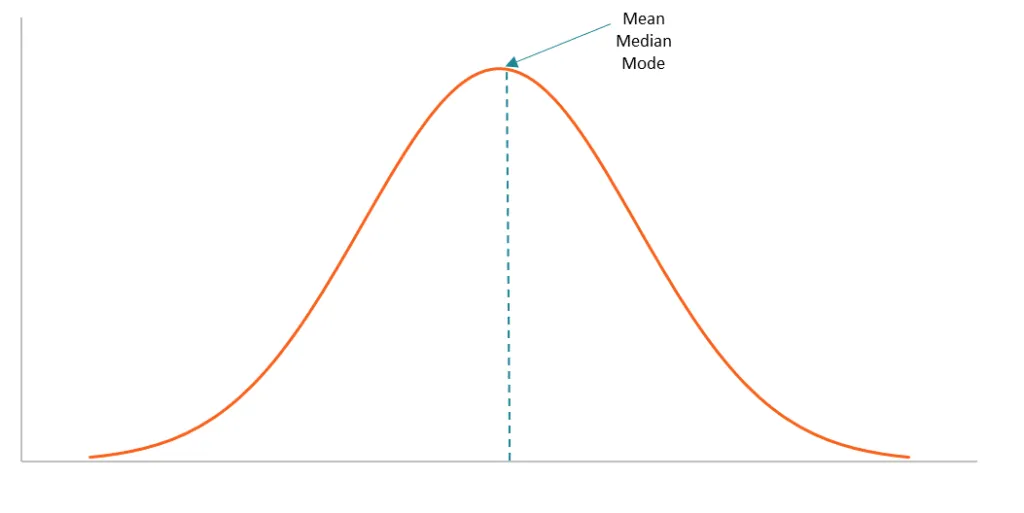
On the macro level, however, the implications are more profound. To understand this, let’s consider three primary dimensions of rhetoric: syntax, vocabulary, and tropes. These dimensions encompass how sentences are structured (syntax), which words are chosen and how they’re used (vocabulary), and the creative use of rhetorical devices like metaphors or antithesis (tropes). Since AI operates by analyzing and replicating patterns in language datasets, its writing reflects the statistical tendencies of its training data. In other words, AI-generated text is governed by the same central tendencies—mean, median, and mode—that define any dataset.

Syntax: The Median Sentence

AI-generated syntax will likely gravitate toward a median level of complexity. Sentences will neither be overly elaborate nor starkly simplistic but will instead reflect the middle level of grammatical intricacy found in its training data. This tendency could lead to a homogenization of sentence structure, with AI producing text that feels competent but not particularly varied or daring in its syntax.

Vocabulary: The Modal Words

Vocabulary choices in AI writing are often dictated by the most common words and phrases in its dataset—the mode. This preference for the most frequent linguistic elements means AI text can sometimes feel generic or boilerplate, favoring safe, widely used terms over more distinctive or idiosyncratic language. While this might ensure accessibility, it also risks a flattening of linguistic diversity, where rarer or less conventional words are underused.

Tropes: The Mean Creativity

When it comes to rhetorical tropes, AI tends toward the mean—a sort of average level of creativity. It might generate metaphors or analogies that are effective but lack the originality or boldness that characterizes the most memorable human writing. The result is a tendency toward competent but predictable creativity, rather than the kind of transformative or disruptive innovation that pushes rhetorical boundaries.

Language as Dataset

If AI treats language as a dataset, it inevitably inherits the statistical biases and patterns inherent in that dataset. While central tendencies like mean, median, and mode are useful for operationalizing numerical datasets, their application to language introduces a new set of challenges. Syntax, vocabulary, and rhetorical tropes may become increasingly tethered to these statistical norms, creating a gravitational pull toward a homogenized style of writing.

This is not to suggest that all AI-generated text will be devoid of creativity or variety. Rather, the concern lies in how the ubiquity of AI writing might influence broader linguistic and rhetorical trends. Will the prevalence of AI-generated text subtly shift our expectations of what “good writing” looks like? Will it amplify certain linguistic conventions while marginalizing others? These are questions worth monitoring as AI continues to shape the ways we write, think, and communicate.

If language becomes tethered to the central tendencies of AI’s datasets, the consequences extend beyond mere stylistic homogenization. They touch on the very dynamism of human expression—the outliers, the deviations, the unexpected turns of phrase that make language vibrant and uniquely human. Monitoring these tendencies isn’t just about understanding AI’s capabilities; it’s about preserving the richness of language itself.

Artificial Intelligence is Artificial

The rise of large language models (LLMs) like ChatGPT has led many to believe we’ve entered an era of artificial general intelligence (AGI). Their remarkable fluency with language—arguably one of the most defining markers of human intelligence—fuels this perception. Language is deeply intertwined with thought, shaping and reflecting the way we conceptualize the world. But we must not mistake linguistic proficiency for genuine understanding or consciousness.

LLMs operate through a process that is, at its core, vastly different from human cognition. Our thoughts originate from lived experience, encoded into language by our conscious minds. LLMs, on the other hand, process language in three distinct steps:

  1. Text is translated into numerical data, where words and phrases are assigned numerical values based on probabilities.
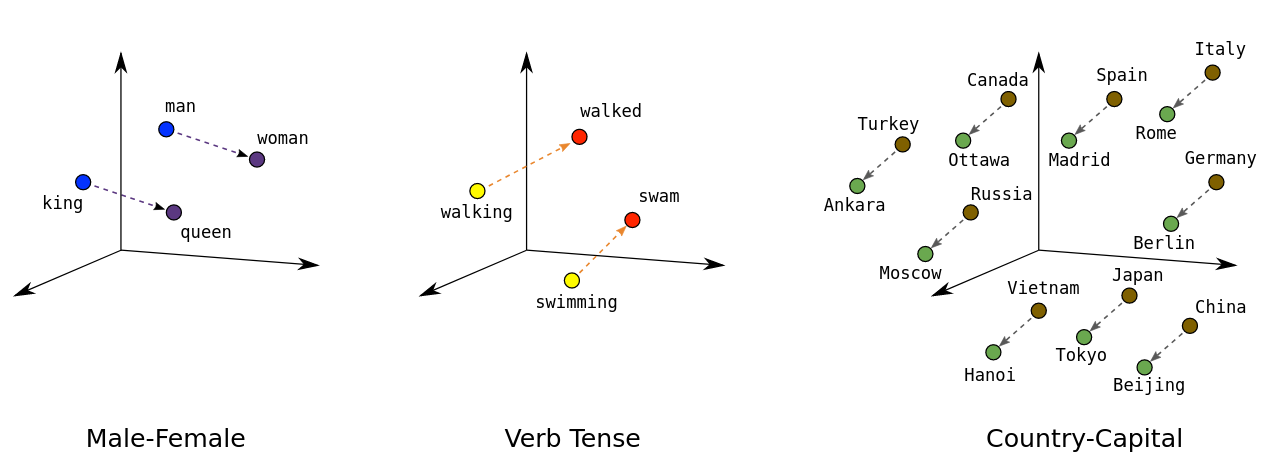
  2. These numbers are plotted within a vast multidimensional space, representing relationships between words.
  3. The model uses these relationships to generate new numerical representations, which are then retranslated into human-readable text.

This process is an intricate and compute-intensive simulation of language use, not an emulation of human thought. It’s modeling all the way down. The magic of such models lies in their mathematical nature—computers excel at calculating probabilities and relationships at scales and efficiencies humans cannot match. But this magic comes at the cost of true understanding. LLMs grasp the syntax of language—the rules and patterns governing how words appear together—but they remain blind to semantics, the actual meaning derived from human experience.

Take the phrase “public park.” ChatGPT “knows” the term only because it has been trained on vast amounts of text where those two words frequently co-occur. The model assigns probabilities to their appearance in relation to other words, which helps it predict and generate coherent sentences. Humans, by contrast, understand “public park” semantically. We draw on lived experience—walking on grass, seeing children play, or reading a sign that designates a space as public. Our understanding is grounded in sensory and conceptual knowledge of the world, not in statistical associations.

Finally, fluffiness is quantified along a scale

This difference is critical. What humans and computers do may appear similar, but they are fundamentally distinct. LLMs imitate language use so convincingly that it can seem like they think as we do. But this is an illusion. Computers do not possess consciousness. They don’t experience the world through sensory input; they process language data, which is itself encoded information. From input to output, their entire function involves encoding, decoding, and re-encoding data, without ever bridging the gap to experiential understanding.

To extend the analogy: a language model understands the geography of words in the way a GPS system represents the geography of the world. A GPS system can map distances, show boundaries, and indicate terrain, but it is not the world itself. It’s a tool, a representation—useful, precise, but fundamentally distinct from the lived reality it depicts. To say AI is intelligent in the way humans are is like saying Google Maps has traveled the world and been everywhere on its virtual globe; this is sort of true, in the sense that a decentralized convoy of Google cars equipped with cameras have indeed crawled the earth collecting visual data for Google street view, but is not literally true.

As we marvel at the capabilities of LLMs, we must remain clear-eyed about their limitations. Their proficiency with language reflects the sophistication of their statistical models, not the emergence of thought. Understanding this distinction is crucial as we navigate an era where AI tools increasingly shape our communication and decision-making.

Science is a process of elimination

Science affirms truth not by direct assertion but by negation. If someone were to ask a scientist, “How are you?” the response, in scientific terms, could not simply be “good.” A more fitting answer would be “not bad” or something equivalent. This distinction highlights a fundamental characteristic of the scientific method: it avoids direct affirmation in favor of ruling out alternatives. Science is not in the business of making unequivocal positive statements about reality but instead progresses by systematically eliminating what is not true.

This framework resembles the process of elimination in a multiple-choice test. For example, when scientists seek to answer a complex question such as “What causes cancer?” they rarely pinpoint a singular, definitive cause from the outset. Instead, they proceed by excluding possibilities—narrowing the field of potential answers by identifying what doesn’t cause cancer. Over time, these negations lead to an indirect approximation of truth.

In rhetorical terms, this mode of expression aligns with litotes, a figure of speech characterized by understatement. Litotes operates by asserting something indirectly, through the negation of its opposite. For instance, saying “not bad” rather than “good” captures a nuanced, precise meaning. Similarly, the scientific method uses this rhetorical approach to articulate findings, allowing for a careful and measured representation of truth that avoids overstatement.

The Rhetoric of Science

The rhetoric of science, a field dedicated to studying how scientists communicate and persuade, reveals that this litotic approach pervades the language of scientific inquiry. Scientists primarily communicate through their studies, and these studies often present findings in a litotic manner. Rather than offering unequivocal proof, scientific studies partially affirm hypotheses by negating competing explanations. In this way, scientific discourse functions less as a mechanism for declaring truths and more as a process of reducing uncertainty.

For example, scientific studies do not state definitively, “This is the cause,” but instead provide evidence that rejects—or fails to reject—the null hypothesis. This distinction underscores the probabilistic nature of scientific claims: science rarely deals in absolutes. Instead, it evaluates competing possibilities, gradually narrowing the scope of uncertainty by eliminating incorrect answers.

Science as Litotic Language

Contrary to popular perceptions of science as a taxonomic system that definitively names and categorizes truths, the language of science is fundamentally litotic. It constructs meaning by naming what something is not, rather than what it is. Each scientific study contributes a single datapoint that refines understanding by rejecting potential errors. Through this iterative process, science approaches truth indirectly, never declaring certainty but instead offering probabilities.

This litotic mode of expression reflects a broader reality: in science, certainty is a moving target, perpetually replaced by degrees of confidence. By articulating truths through negation, science not only mirrors the logic of litotes but also exemplifies its rhetorical precision. In doing so, it avoids the pitfalls of overstatement while offering a uniquely rigorous path to knowledge.

Human versus Artificial Intelligence

From my appearance on NPR’s The Academic Minute

Humans think in words, AI in numbers. The revolutionary Large Language Model ChatGPT works like a round of Family Feud: it answers our questions with only the likeliest responses, as determined by probability distributions. Is this “intelligence”? How should we understand truth in a world where words are assigned numbers, like the points in a Family Feud survey?  

We often think of science as taxonomic, but it’s not really. Scientific classification is negative and imperfect; it names by ruling out. Science says a mammal is an animal that doesn’t lay eggs. But what about the platypus? 

In rhetoric this is known as litotes, a rhetorical device in which something is affirmed by negating its opposite, like if you ask how I’m doing and I respond, “not bad.” Paradoxically, this rhetorical approach can offer greater accuracy while granting less detail.  

Science is litotical. Frequently accurate but insufficiently detailed, scientific studies are limited to two types of negative findings; they either reject or fail to reject a hypothesis. This kind of knowledge is useful in a laboratory, but the real world has platypuses. Truth in the real world is more than the difference of everything it’s not. 

AI is similar, for now at least. AI doesn’t name, it affirms by negation. ChatGPT sees the world as a multiple-choice question, and it responds through a process of elimination. Humans, meanwhile, fill in the blanks. We confront uncertainty not by calculating probabilities but by consulting wisdom.  

Each word generated by an AI represents the rejection of an alternative; artificial intelligence is fueled by probability rather than possibility. That’s a new world. Before it’s here, we should remember that human intelligence isn’t confined to the artificial horizon between rejecting and failing to reject hypotheses, and that our wisdom is deeper than its syntax.