
As artificial intelligence increasingly generates the written and published text we consume, it’s worth considering the consequences on both individual and societal levels. On the micro level—the everyday use of AI in writing—I suspect the changes will be subtle but meaningful. Individual writing abilities are likely to improve, as AI tools act as an accessible public option for crafting coherent prose. Just as autocorrect has quietly raised the baseline for grammatical accuracy in text messages and online posts, AI tools will elevate the overall quality of written communication. AI will make polished, coherent writing accessible to more people, effectively raising the “floor” of writing ability.
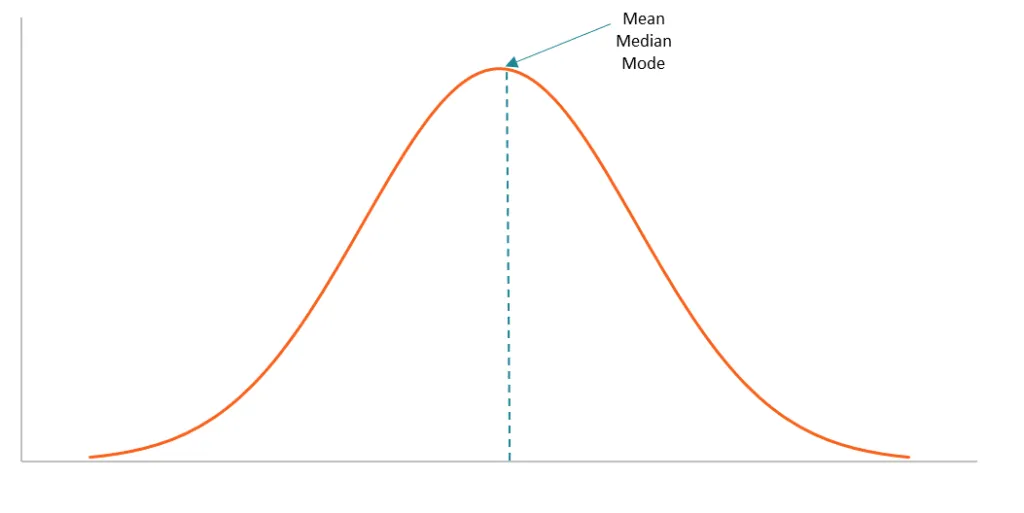
On the macro level, however, the implications are more profound. To understand this, let’s consider three primary dimensions of rhetoric: syntax, vocabulary, and tropes. These dimensions encompass how sentences are structured (syntax), which words are chosen and how they’re used (vocabulary), and the creative use of rhetorical devices like metaphors or antithesis (tropes). Since AI operates by analyzing and replicating patterns in language datasets, its writing reflects the statistical tendencies of its training data. In other words, AI-generated text is governed by the same central tendencies—mean, median, and mode—that define any dataset.
Syntax: The Median Sentence
AI-generated syntax will likely gravitate toward a median level of complexity. Sentences will neither be overly elaborate nor starkly simplistic but will instead reflect the middle level of grammatical intricacy found in its training data. This tendency could lead to a homogenization of sentence structure, with AI producing text that feels competent but not particularly varied or daring in its syntax.
Vocabulary: The Modal Words
Vocabulary choices in AI writing are often dictated by the most common words and phrases in its dataset—the mode. This preference for the most frequent linguistic elements means AI text can sometimes feel generic or boilerplate, favoring safe, widely used terms over more distinctive or idiosyncratic language. While this might ensure accessibility, it also risks a flattening of linguistic diversity, where rarer or less conventional words are underused.
Tropes: The Mean Creativity
When it comes to rhetorical tropes, AI tends toward the mean—a sort of average level of creativity. It might generate metaphors or analogies that are effective but lack the originality or boldness that characterizes the most memorable human writing. The result is a tendency toward competent but predictable creativity, rather than the kind of transformative or disruptive innovation that pushes rhetorical boundaries.
Language as Dataset
If AI treats language as a dataset, it inevitably inherits the statistical biases and patterns inherent in that dataset. While central tendencies like mean, median, and mode are useful for operationalizing numerical datasets, their application to language introduces a new set of challenges. Syntax, vocabulary, and rhetorical tropes may become increasingly tethered to these statistical norms, creating a gravitational pull toward a homogenized style of writing.
This is not to suggest that all AI-generated text will be devoid of creativity or variety. Rather, the concern lies in how the ubiquity of AI writing might influence broader linguistic and rhetorical trends. Will the prevalence of AI-generated text subtly shift our expectations of what “good writing” looks like? Will it amplify certain linguistic conventions while marginalizing others? These are questions worth monitoring as AI continues to shape the ways we write, think, and communicate.
If language becomes tethered to the central tendencies of AI’s datasets, the consequences extend beyond mere stylistic homogenization. They touch on the very dynamism of human expression—the outliers, the deviations, the unexpected turns of phrase that make language vibrant and uniquely human. Monitoring these tendencies isn’t just about understanding AI’s capabilities; it’s about preserving the richness of language itself.
 Daniel Ernst